Grit in the aerator screens, a cloudy glass that clears if you let it sit, a water heater that rumbles. Sediment in well water is the most visible well problem and the one to fix first, because every other filter in the house, from a softener to a UV lamp, clogs or fouls when sand and silt reach it. The short answer: find out whether the material settles or stays suspended, then put a spin-down screen, a cartridge filter or a backwashing tank ahead of everything else, sized to the particle you actually have.
What causes sediment in well water
Sediment is anything solid that the pump pulls up with the water. Where it comes from decides how you treat it, and sometimes whether a filter is the right fix at all.
- A new or recently serviced well. Drilling leaves fines in the borehole. Penn State Extension's well maintenance guide says adequate well development "will stabilize the aquifer material so that subsequent pumping from the well will not result in excessive sediment removal," and that wells not properly developed at the start are a common source of later trouble.
- A failing well screen or a pump set too low. The University of Georgia's private water systems bulletin lists turbidity problems "when the well screen is not sized correctly or the water table drops and the water cascades into the well." Penn State adds that corroded, enlarged screen openings lead to sand pumping, and that abrasive wear from sand pumping is the leading cause of pump failure. A sudden increase in sand is a well problem before it is a filter problem.
- Fractured bedrock. Wells drilled through fractured rock can carry fine rock flour and silt that never fully clears.
- Corroding steel casing or galvanized pipe. Rust flakes look like sediment and act like sediment, but the source is the plumbing. See the iron page if the flakes are red-brown.
- Surface influence. A shallow well that clouds up after heavy rain is drawing runoff. That water can also carry bacteria, which changes what you test for.
How to tell sediment from iron, manganese and tannins
Four things make well water look dirty, and they need four different treatments.
| What you see | Likely cause | Where to read more |
|---|
| Material settles to the bottom of a jar within an hour; water above it clears | Sand, silt or scale (true sediment) | This page |
| Water is clear from the tap, turns orange or forms rust particles after standing | Dissolved ferrous iron oxidizing in air | Iron |
| Black or brown-black flakes and stains, even when iron tests low | Manganese | Manganese |
| Even yellow to tea color that never settles or changes | Tannins (dissolved organics) | Tannins |
| Milky water that stays uniformly cloudy for hours | Colloidal clay or very fine silt | This page, lab turbidity test |
Virginia Tech's household water treatment guide notes that the particles a sediment filter removes include oxidized iron and manganese as well as sand, silt and clay. So a cartridge will catch rust flakes that are already solid. It will not catch dissolved iron, which passes straight through and oxidizes later in the toilet tank.
Is it a health risk?
Sediment itself is not regulated for private wells and is mostly a nuisance. There is no EPA standard for turbidity in a private well. For public water systems that filter surface water, the EPA's National Primary Drinking Water Regulations set a treatment technique rather than a concentration limit: turbidity can never go above 1 nephelometric turbidity unit (NTU), and at least 95 percent of monthly samples must be at or below 0.3 NTU for conventional filtration. Those rules do not apply to your well, but 1 NTU is a reasonable target for treated water.
The reason regulators care is the one that matters for you too. The USGS turbidity page explains that cloudiness can provide "shelter" for microbes and that high turbidity is associated with waterborne disease outbreaks. Turbidity also binds to metals and other pollutants. In a well, that means a clouding event after rain is a signal to test for bacteria, not just to buy a filter. It also means a UV disinfection system cannot do its job through cloudy water; see the bacteria page.
How to test for sediment in well water
Sediment is one of the few problems you can diagnose mostly at the kitchen sink. Follow the steps in order.
- Fill a clear jar. Run the cold tap nearest the pressure tank for 60 seconds, then fill a clear glass jar and let it stand for an hour.
- Read the jar. Material that settles to the bottom is sand or silt (a sediment filter problem). Water that stays cloudy is fine suspended solids or colloidal clay, which need a finer filter or a lab turbidity test. Water that turns orange after standing is dissolved iron, not sediment.
- Check the aerators. Unscrew a faucet aerator. Coarse grit means sand or scale; fine red-brown powder means oxidized iron or manganese; black slime suggests iron or sulfur bacteria.
- Send a sample if the water stays cloudy. Ask a state-certified lab for turbidity in NTU and total suspended solids. If the well is shallow or the cloudiness follows rain, add total coliform and E. coli to the order.
Both the EPA and the CDC recommend testing a private well at least once a year for total coliform bacteria, nitrate, total dissolved solids and pH, and testing again whenever the water changes in taste, color or clarity or after any well repair. Use a state-certified laboratory; your county or state health department keeps the list. Our testing guide walks through ordering a panel and taking the sample.
Treatment options
Sediment is removed mechanically. Virginia Tech describes sediment filters as physical strainers rated "according to the smallest particle it can trap," with the rating in microns, one millionth of a meter. A lower micron number catches finer particles and clogs sooner. Match the stage to the particle, and put the coarse stage first.
Spin-down (centrifugal) filter
A reusable stainless screen, typically 50 to 1,000 micron, in a clear housing with a flush valve at the bottom. Water spins in the housing, heavy sand drops out, and you clear it by opening the valve for a few seconds. There are no cartridges to buy. It is the right first stage for a well that pumps visible sand or grit, installed after the pressure tank and before every other filter. It does nothing for silt, clay or cloudiness, and if the well is pumping enough sand to need daily flushing, call a well contractor about the screen or pump setting rather than filtering harder.
Cartridge sediment filter
A 10 or 20 inch housing holding a replaceable cartridge from 1 to 50 micron: pleated for reusable coarse filtration, string-wound or melt-blown depth cartridges for fine silt. UGA calls cartridge filters "very effective in removing extremely fine particles" and suits them to lighter loads or as a second stage. A common well setup is a spin-down, then a 20 micron cartridge, then a 5 micron cartridge ahead of anything sensitive. Change cartridges on pressure drop, not on the calendar; a gauge on each side of the housing tells you when. Our replacement guide covers intervals and cartridge types.
Backwashing sediment filter
A pressure tank of granular media (sand, garnet or a lightweight filter media) with an automatic valve that reverses flow to drain on a timer. UGA describes the sand filter as "an 18- to 24-in.-deep bed of fine sand" that needs periodic backwashing and suits heavy suspended solids. Choose this when cartridges would clog weekly. It needs a drain, a modest amount of backwash water and enough well flow to lift the bed; check your pump's gallons per minute with the sizing tool before buying.
Whatever you pick, the order downstream matters: sediment first, then an iron filter, then a softener for hardness, with UV last. Virginia Tech is explicit that UV units must be preceded by devices that filter or clarify the water, and that sediment filters protect reverse osmosis membranes too.
Systems that treat sediment in well water
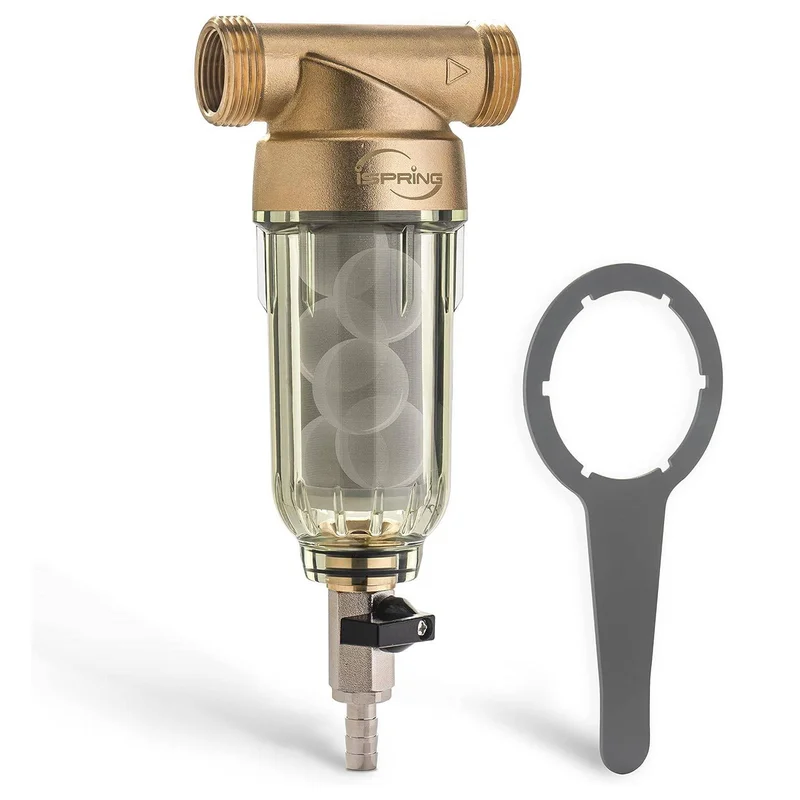
iSpring · Sediment filter · $80 at iSpring as of Oct 2026
- Treats
- Sediment
- Flow
- 20 GPM
- Micron
- 50
- Install
- DIY
- Warranty
- 1-year
Spin-down sediment filter plus Siliphos scale-inhibitor cartridge, 20 GPM, 50-micron reusable screen, for $79.99. Siliphos is not a softener and needs replacing every 3-6 months; 100 psi max and 1-year warranty.
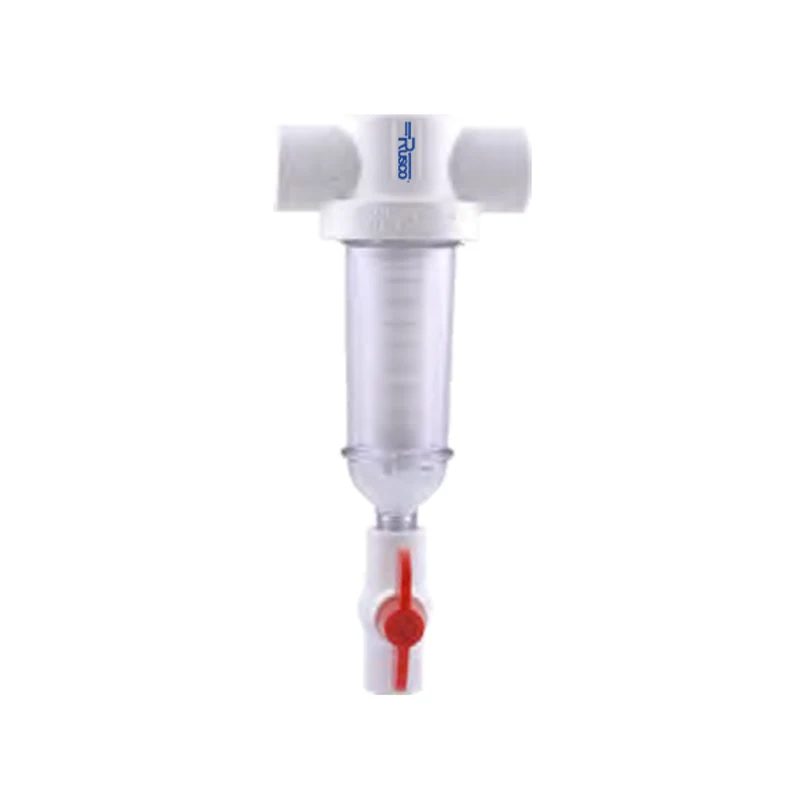
Rusco · Sediment filter · $47 at retailer as of Oct 2026
- Treats
- Sediment
- Flow
- 25 GPM
- Micron
- 150
- Install
- DIY or pro
- Warranty
- 1-year
US-made 1 in. spin-down rated 1-25 GPM and 150 psi with flushable polyester or stainless screens from 700 to 15 microns. 12-month warranty, voided by tools; lead-free IAPMO listing only.
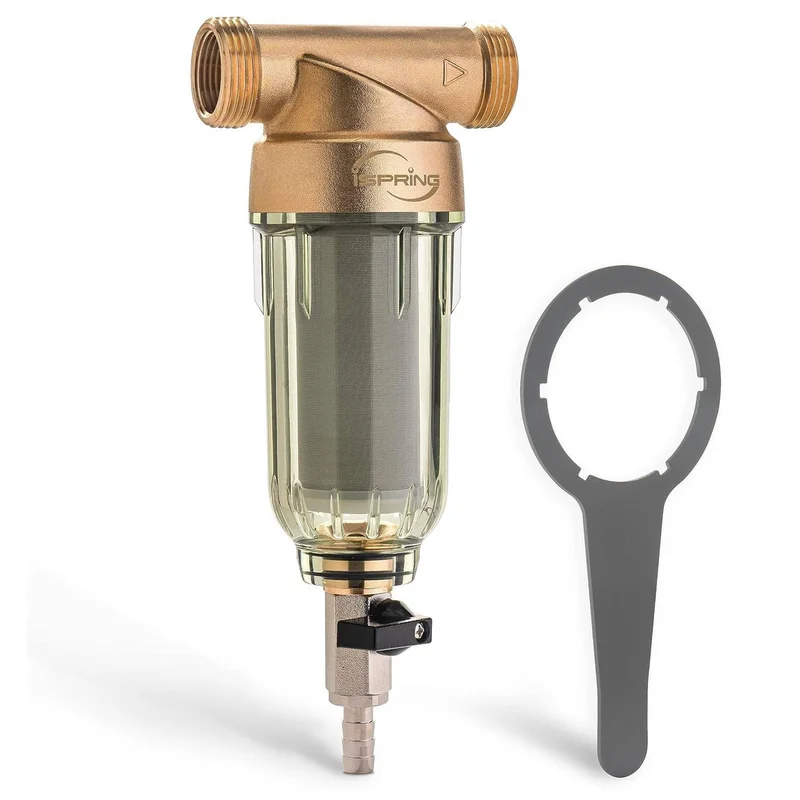
iSpring · Sediment filter · $70 at iSpring as of Oct 2026
- Treats
- Sediment
- Flow
- 20 GPM
- Micron
- 50
- Install
- DIY
- Warranty
- 1-year
Flushable 50-micron stainless screen in a clear housing with a 1 in. MNPT / 3/4 in. FNPT brass head, about 20 GPM, for $69.99. No cartridges to buy; too coarse as a final stage and only a 1-year warranty.
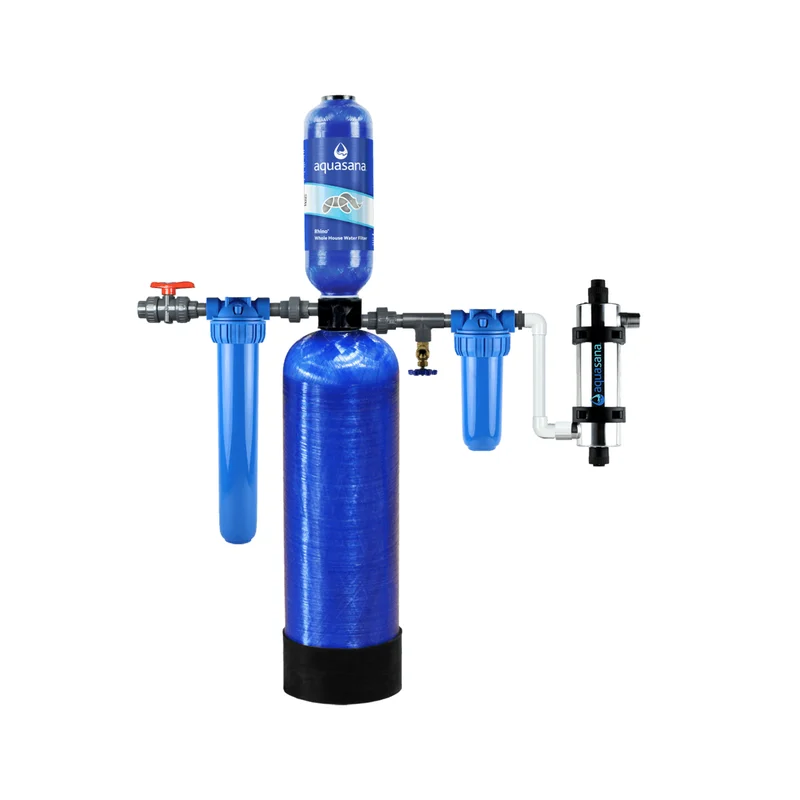
Aquasana · Whole-house filter · $1,749 (sale) at Aquasana as of Oct 2026
- Treats
- Bacteria, Sediment
- Flow
- 7 GPM
- Capacity
- 500k gal
- Install
- DIY or pro
- Warranty
- 5-year
Carbon and KDF whole-house tank with an NSF/ANSI 55 Class B certified UV stage, 500,000-gallon media life and no backwash. No iron or sulfur claim; 7 GPM rated flow and pre-filter changes every 2 months.
US Water Systems · Sediment filter · $72 (sale) at US Water Systems as of Oct 2026
- Treats
- Sediment
- Flow
- 25 GPM
- Micron
- 152
- Install
- DIY
- Warranty
- 1-year
3/4 in. flushable spin-down with a 100 mesh (152 micron) reusable screen, 25 GPM max and a tool-free clear cover, for $71.95 on sale. No parts warranty printed; 1 in. and larger sizes are Rusco units.
iSpring · Iron filter · $536 at iSpring as of Oct 2026
- Treats
- Iron, Manganese, Sediment
- Flow
- 15 GPM
- Capacity
- 50,000 gal
- Install
- DIY
- Warranty
- 1-year
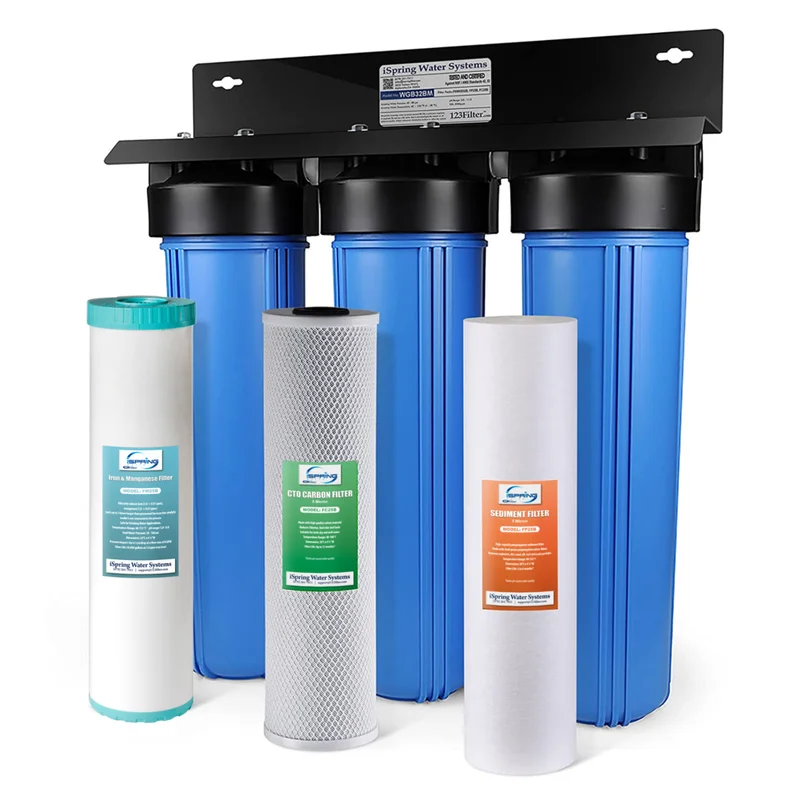
Three-stage cartridge system with an FM25B cartridge rated for iron to 3 ppm and manganese to 1 ppm, 15 GPM, no drain or power, for $535.99. Iron cartridge lasts 50,000 gallons; no sulfur claim; 1-year warranty.
Choose by particle size and load. Visible sand with clear water above it: a spin-down alone may be enough. Fine silt or a persistently cloudy jar: a cartridge housing, often two in series. A well that fills a cartridge in days: a backwashing tank. Confirm the housing size and the backwash flow rate against your pump with the sizing tool, and read the sediment filter guide and the spin-down guide for the trade-offs in detail.
Before you buy
- Do the jar test and the aerator check before you spend anything. If the material does not settle, get a lab turbidity number through the testing guide.
- A sudden surge of sand is a well or pump problem; fix the cause before filtering the symptom.
- Size the filter to your pump's flow, not to the house, with the sizing tool.
- Compare our ranked picks on the best well water filters page, and if you would rather not sweat a 1 inch union in a crawl space, find a local pro through the installer directory.
- Retest treated water after installation, and again every year.