Well Water Filtration
Menu

This page contains affiliate links. If you buy through them we may earn a commission at no extra cost to you. How we make money

Best Sediment Filter for Well Water (2026): Ranked & Compared

Specs verified 2026-10-05 from manufacturer spec sheets and retailer listings. We have not lab-tested these filters; see how we ranked.

Sediment is the first stage of almost every well water setup, because sand and grit wear out pump valves and foul the media in every filter downstream. The seven filters below are the spin-down, cartridge and backwashing sediment filters we could verify, ranked on micron rating, rated flow, how they are cleaned, warranty terms and the verified price. Nothing here comes from a lab test of our own.

If you are not sure which type you need, the sediment filter guide explains micron ratings and when a spin-down filter belongs ahead of a cartridge, and the sediment problem page covers testing. For iron, odor or hardness on top of the grit, see the whole-house ranking.

Quick picks

Comparison table

Micron is the nominal rating the manufacturer publishes; flow is the rated service flow in gallons per minute. Prices are the retailer price on the verification date.

The ranked list

iSpring WSP-50SL Spin Down Sediment Filter with Siliphos

iSpring · Sediment filter · $80 at iSpring as of Oct 2026

Treats
Sediment
Flow
20 GPM
Micron
50
Install
DIY
Warranty
1-year

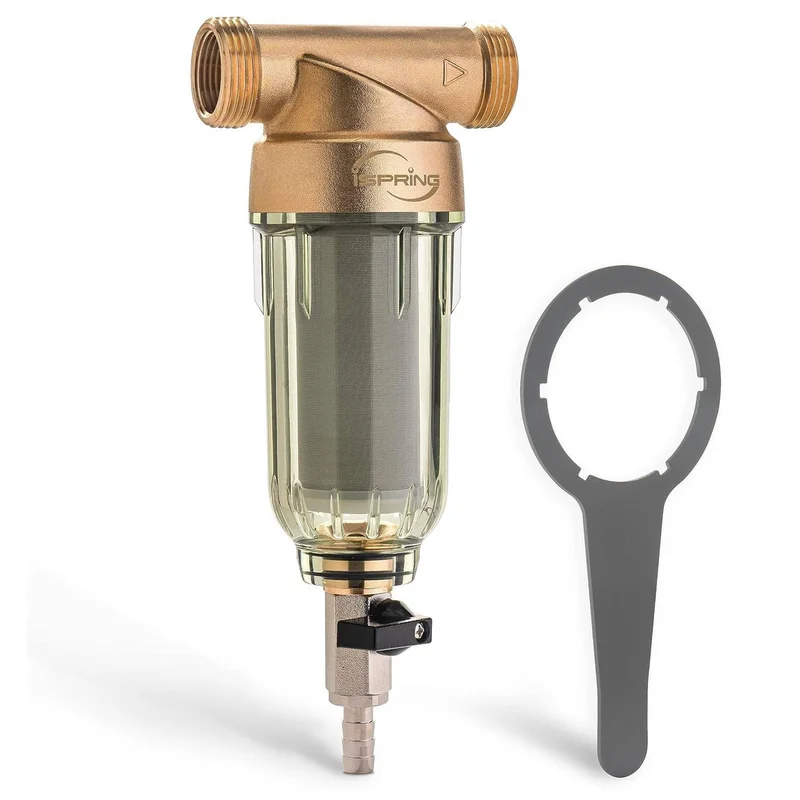
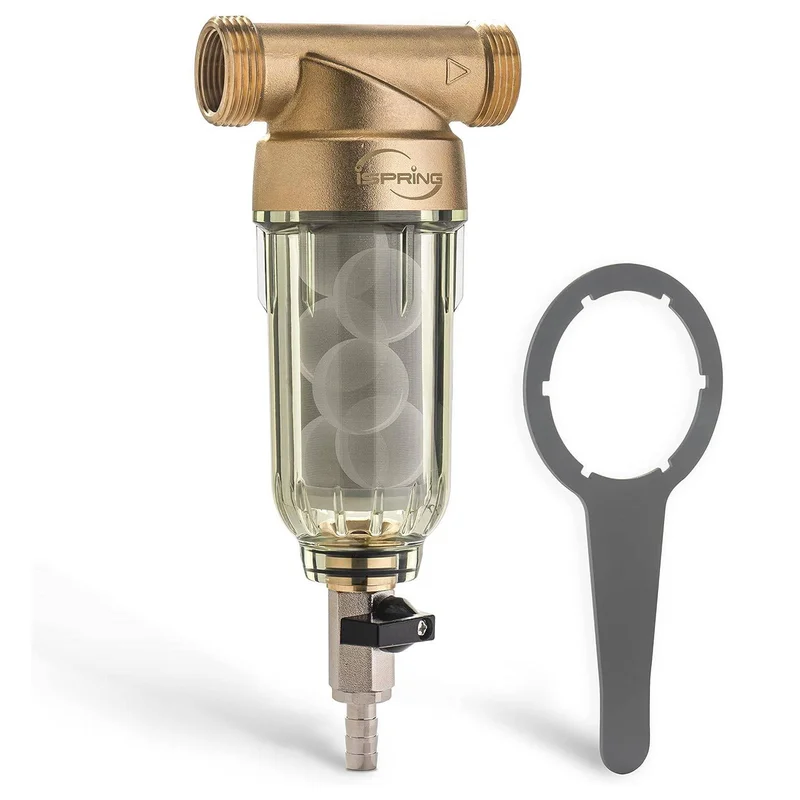
The WSP-50SL tops the list because it does two jobs in one small housing: a flushable, reusable 50-micron 316L stainless mesh screen catches sand, rust and grit, and a Siliphos polyphosphate cartridge in the same clear housing adds scale and corrosion inhibition for the water heater and plumbing downstream. It is rated 20 GPM, the lead-free brass head is double-threaded with 1 in. MNPT and 3/4 in. FNPT ends, so it fits either line size without adapters, and the flush-out valve has a garden-hose barb. At $79.99 at ispringfilter.com as of Oct 2026 (regular price) it costs about $10 more than the plain WSP-50 below.

The trade-offs are the same as any spin-down plus one. Fifty microns is a first stage, not a final one, so silt still needs a cartridge behind it; the Siliphos beads are a scale inhibitor, not a softener, and iSpring says to replace that cartridge every 3 to 6 months; and the housing is rated to 100 psi, lower than the WSP-50's 115 psi. The warranty is iSpring's standard 1 year with a 30-day money-back period, no NSF/ANSI certification is cited for the model, and it is for indoor use only. The housing measures 3.5 x 3.5 x 9 in. and weighs about 1 lb.

Pros

  • Adds polyphosphate scale inhibition to a basic spin-down for about $10 more than the WSP-50
  • Same reusable stainless screen and dual-thread head

Cons

  • Siliphos is a scale inhibitor, not a softener; cartridge needs replacing every 3-6 months
  • 100 psi max pressure (lower than the WSP-50's 115 psi)
  • 1-year warranty

Rusco 1 in. Spin-Down Sediment Filter

Rusco · Sediment filter · $47 at retailer as of Oct 2026

Treats
Sediment
Flow
25 GPM
Micron
150
Install
DIY or pro
Warranty
1-year

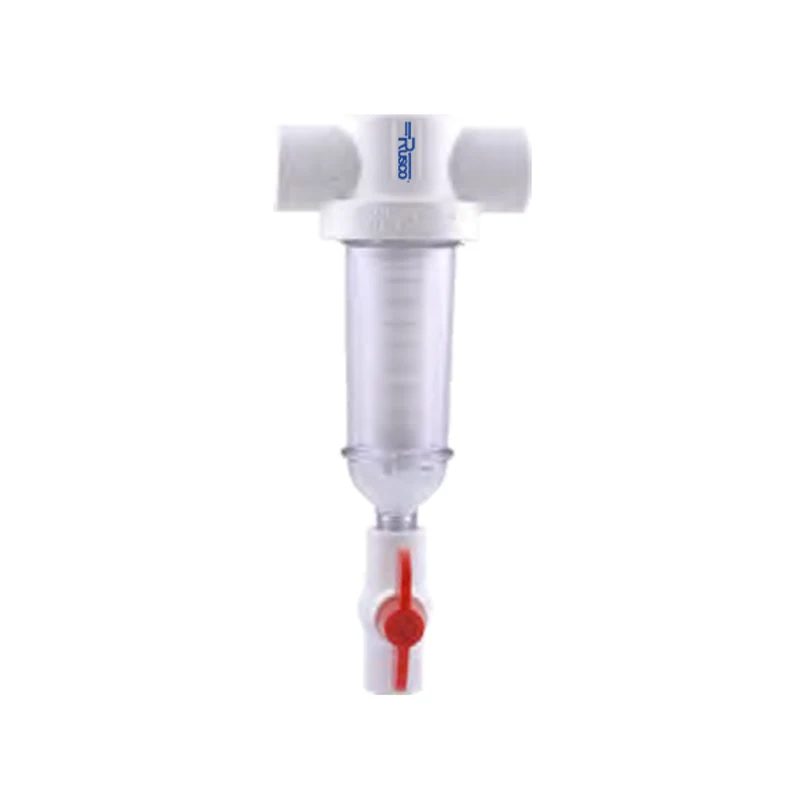
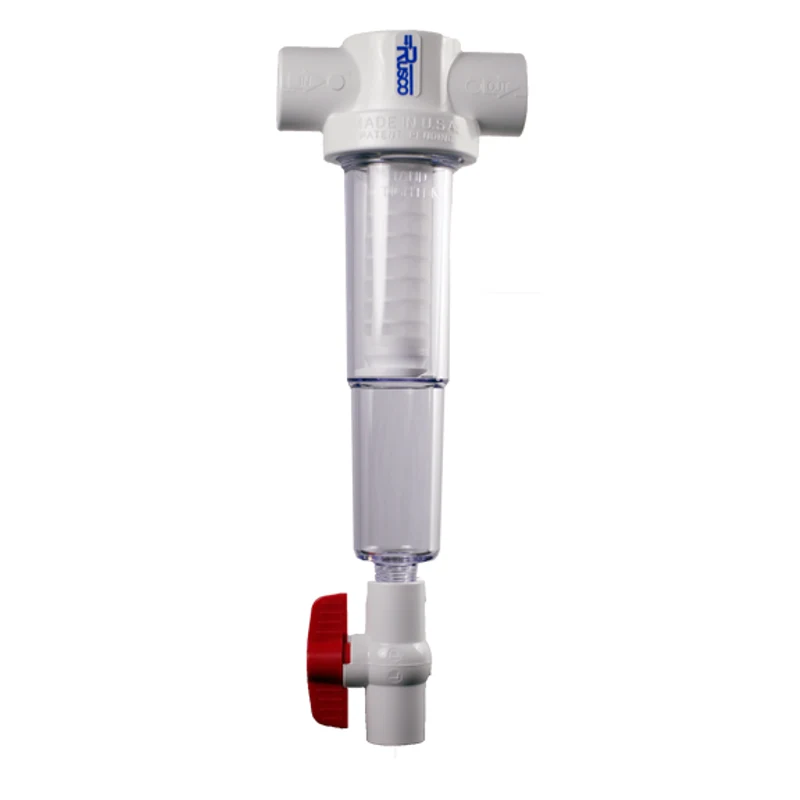
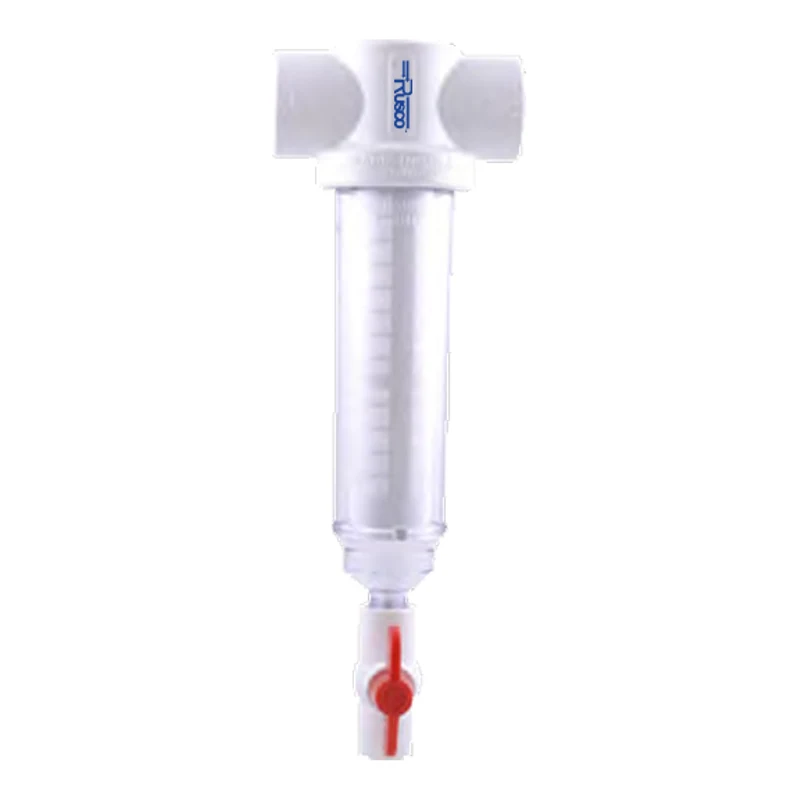
Rusco's 1 in. Spin-Down is the standard-setter for sandy wells: a clear centrifugal housing with a reusable polyester or stainless steel screen that you clean by opening the flush valve, rated 1 to 25 GPM and 150 psi, with 1 in. slip ports that suit most pressure-tank outlets. Rusco publishes nine polyester mesh sizes from 24 mesh (700 microns) down to 1000 mesh (15 microns) and five stainless sizes, with the 100 mesh (150 micron) screen as the common default and 250 mesh (50 micron) and 500 mesh (30 micron) as the finer options. It is made in Brooksville, Florida.

It is second rather than first on documentation and terms. Rusco warrants all components for 12 months from the original sale, limits liability to the cost of the part, and voids the warranty if tools are used on the housing (hand tighten only). IAPMO R&T lists the 1-100-F under File No. 6759 as a lead-free plumbing product, which covers lead content only, so we record no filtration-performance certification. Rusco's site shows no prices; the 100 mesh 1-100-F was $46.80 at SupplyHouse.com as of Oct 2026, and the exact model is on Amazon. The housing is 11-3/8 in. long and 5 in. wide.

Pros

  • Screens flush and reuse; nine mesh options from 700 down to 15 microns
  • 1 in. slip ports suit most well pressure-tank outlets
  • Made in Brooksville, Florida

Cons

  • 12-month warranty, and use of tools on the housing voids it
  • Only a lead-free IAPMO R&T listing (Safe Drinking Water Act Section 1417(d)); no NSF/ANSI filtration-performance certification
  • Maximum temperature not stated on the standard (cold water) page

iSpring WSP-50 Reusable Spin Down Sediment Filter

iSpring · Sediment filter · $70 at iSpring as of Oct 2026

Treats
Sediment
Flow
20 GPM
Micron
50
Install
DIY
Warranty
1-year

The WSP-50 is one of the lowest-cost first stages in the ranking (only the Rusco 1 in. Spin-Down's $46.80 retailer price is lower): $69.99 at ispringfilter.com as of Oct 2026 (regular price; all mesh sizes list at the same price) for a flushable 50-micron 316L stainless screen in a see-through PCTG housing with a lead-free brass head, mounting bracket and flush valve. The same housing takes 100-, 200-, 500- and 1000-micron cartridges, the double-threaded head fits 1 in. MNPT or 3/4 in. FNPT lines, and iSpring says the screen usually lasts 1 to 2 years. It is rated 115 psi maximum (25 to 80 psi recommended) and iSpring reports it passed a 500 psi burst test and a 100,000-cycle water hammer test.

It sits below the Siliphos version because it does one job, and below the Rusco on screen range and pressure rating. The 20 GPM figure is the maximum flow given in iSpring's WSP series manual, the flush valve takes 3/8 in. OD tubing on the base model (the $133.99 push-fit bundle adds a garden-hose barb and ball valve), and the listed weight is 1 lb on this page but 4 lb on the bundle page. The warranty is 1 year on the brass body with 30-day money-back; no NSF/ANSI certification is cited for this model. Fifty microns is too coarse to be your only sediment stage.

Pros

  • Lowest-cost first stage for sandy well water; no cartridges to buy
  • Clear housing shows when a flush is needed
  • Dual-thread head fits 3/4 in. or 1 in. lines

Cons

  • 50 micron is too coarse to be a final sediment stage
  • Only a 1-year warranty
  • Weight listed as 1 lb on the base page but 4 lb on the push-fit bundle listing

US Water Systems Centrifugal Sediment Spin-Down Filter (3/4 in.)

US Water Systems · Sediment filter · $72 (sale) at US Water Systems as of Oct 2026

Treats
Sediment
Flow
25 GPM
Micron
152
Install
DIY
Warranty
1-year

US Water Systems' own-brand spin-down is the pick for a 3/4 in. line: 3/4 in. FPT inlet and outlet, a 1/2 in. FPT drain, a clear cover that comes off without tools for cleaning, and a reusable polyester screen flushed through the bottom ball valve. It is rated 25 GPM maximum and 150 psi at 73 F, and the maker lists seven screen options from 24 mesh (711 microns) to 1000 mesh (15 microns); it ships with the 100 mesh (152 micron) screen. At $71.95 at uswatersystems.com as of Oct 2026 (sale; regular $119.92) it is priced with the iSpring units.

Fourth place reflects the fine print. The product page prints only the company's One-Year Money Back Promise and no separate parts warranty, and no certifications are stated. The US Water Systems brand is listed only in 3/4 in.; the 1 in., 1.5 in. and 2 in. spin-downs sold on the same site are resold Rusco Sediment Trapper units, so a 1 in. line points you to the Rusco entries instead. Even the finest 1000 mesh screen stops at 15 microns, so it is not a substitute for a 5-micron cartridge. The housing stands 11.375 in. tall and 7.25 in. wide.

Pros

  • Reusable screen flushed via the bottom ball valve, so no cartridge consumables
  • Clear bowl shows sediment load
  • Low cost entry point for coarse sand and grit ahead of a tank system

Cons

  • 3/4 in. ports only in the US Water Systems brand; 1 in. and larger lines are Rusco units
  • Screen filtration only down to 15 microns at the finest option; not a substitute for a 5 micron cartridge
  • Only the one-year money-back promise is printed; no longer parts warranty stated

SpringWell Sediment Filter Canister + 5 Micron Filter

SpringWell · Sediment filter · $83 (sale) at SpringWell as of Oct 2026

Treats
Sediment
Flow
20 GPM
Micron
5
Install
DIY
Warranty
Lifetime

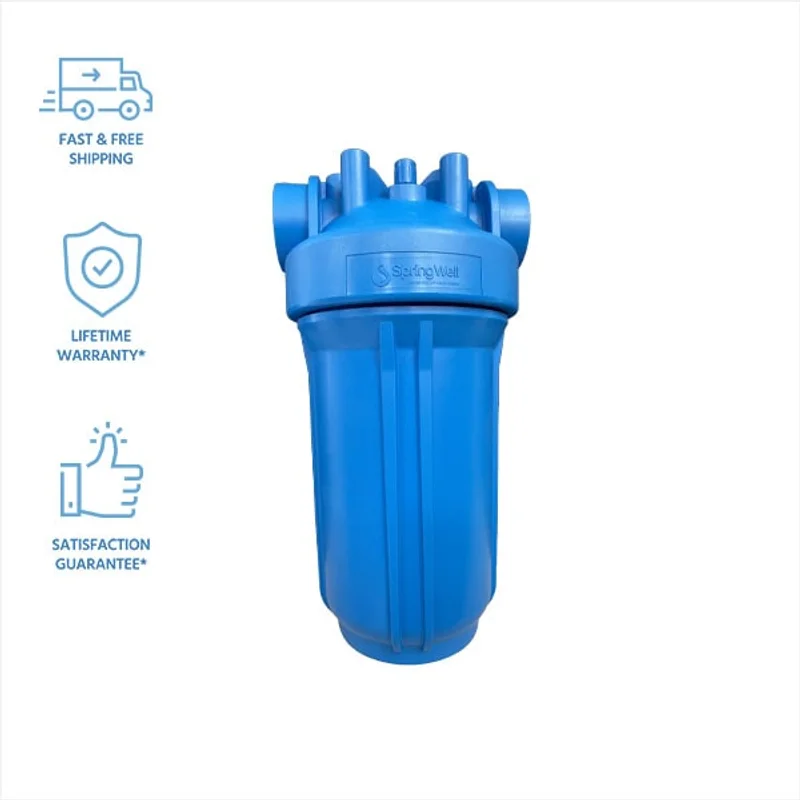
SpringWell's canister is the fine-cartridge stage in this ranking rather than a spin-down: a complete 10 in. housing with a 5-micron cartridge, mounting bracket, O-ring and spanner wrench, rated 20 GPM with 1 in. in/out ports (the PF-20 size on the same listing is a 20 in. housing with 1.5 in. ports rated 35+ GPM). SpringWell recommends installing it ahead of softeners and UV systems and changing the cartridge every 6 to 9 months. The housing carries a lifetime warranty against defects, which is unusual for a cartridge pre-filter; returns are accepted within 6 months only for unused, uninstalled items, with a 10% restocking fee. No drain or power is needed.

It ranks fifth because it is a different tool with a higher running cost. At $83.23 at springwellwater.com as of Oct 2026 (sale; regular $150.00), the regular price is high for a standard 10 in. housing, replacement 5-micron cartridges are an ongoing purchase, and only the 5-micron option is listed, so there is no coarse screen to protect it on a sandy well. No gallon capacity is published and no certifications are stated. Put it behind a spin-down from the top of this list and it becomes the final sediment stage the spin-downs cannot be.

Pros

  • Lifetime housing warranty is unusual for a cartridge pre-filter
  • 20 in. option with 1.5 in. ports for high-flow homes

Cons

  • Only a 5-micron cartridge option is listed; no coarse spin-down stage for heavy sand
  • No published capacity rating
  • Regular price of $150 is high for a standard 10 in. housing

Rusco 1 in. Sediment Trapper

Rusco · Sediment filter · $85 at retailer as of Oct 2026

Treats
Sediment
Flow
25 GPM
Micron
150
Install
DIY or pro
Warranty
1-year

The 1 in. Sediment Trapper is Rusco's 1 in. Spin-Down with a longer body, 14-3/8 in. against 11-3/8 in., and a wider choice of elements. It shares the 1 to 25 GPM range, 150 psi maximum and 1 in. slip ports, and takes the same polyester (700 down to 15 microns) and stainless screens, but it also accepts disposable melt-blown elements in 50, 20, 10, 5 and 1 micron, pleated elements from 50 down to 1 micron, a 5-micron activated carbon element and heavy-duty screens up to 4000 microns. Rusco describes the melt-blown elements as suited to silt, oil, grease, dirt and rust.

It is sixth because Rusco's page does not put a number on how much more sediment the longer housing holds, so the advantage over the standard spin-down is hard to weigh, and because the terms are the same 12-month component warranty with only a lead-free IAPMO R&T listing, not a filtration-performance certification. Rusco's site shows no prices; the 100 mesh 1-100ST-F was $84.72 at Fresh Water Systems as of Oct 2026, and US Water Systems resells it as its 1 in. centrifugal unit. For a well where you want one housing that can run a coarse screen now and a 5-micron element later, the element flexibility is the reason to choose it.

Pros

  • Same 1 in. slip ports and flow range as the spin-down with a longer body and wider element choice, including 1 to 5 micron melt-blown and pleated elements
  • Reusable screen options keep consumable cost low

Cons

  • Rusco's page does not explain the capacity difference from the standard spin-down in numbers
  • 12-month warranty
  • Only a lead-free IAPMO R&T listing (Safe Drinking Water Act Section 1417(d)); no NSF/ANSI filtration-performance certification

Rusco 1-1/2 in. Spin-Down Sediment Filter

Rusco · Sediment filter · $77 at retailer as of Oct 2026

Treats
Sediment
Flow
50 GPM
Micron
150
Install
DIY or pro
Warranty
1-year

The 1-1/2 in. Spin-Down is the Rusco for larger homes and 1-1/2 in. well lines: the same reusable polyester or stainless screens and clear centrifugal housing, rated 10 to 50 GPM and 150 psi, with 1.5 in. slip ports and a 15-3/8 x 5-1/4 in. body. Screen choice matches the 1 in. unit, nine polyester meshes (700 to 15 microns) and five stainless, with 100 mesh (150 microns) as the usual default. It is made in the USA and sold as a self-install with Rusco's published guides, hand-tightened only.

It closes the list because most well owners do not need its flow, and because the specs are easy to confuse: Rusco also sells a 1-1/2 in. hot-water spin-down with 18 to 100 GPM flow and 1.5 in. FPT ports, a different housing. Rusco's site shows no prices; the 100 mesh 1-1/2-100-F was $77.13 at Fresh Water Systems as of Oct 2026. The warranty is Rusco's 12 months on components, voided by use of tools, and IAPMO R&T lists the model as a lead-free plumbing product only, not for filtration performance. Choose it for a 1-1/2 in. service line or a large household; otherwise the 1 in. unit does the same job.

Pros

  • Higher 10-50 GPM range for larger homes or 1-1/2 in. well lines
  • Same reusable screen system and mesh options as the 1 in. unit

Cons

  • Two different 1-1/2 in. housings (standard 1-1/2-100-F vs hot-water 1-1/2-100HT-F) with different flow, port and price can be confused when ordering
  • 12-month warranty voided by use of tools
  • No exact-model Amazon listing verified

How we ranked these filters

We have not run these filters on a test rig, and we do not publish invented ratings or reviews. The ranking is built from specifications we could verify on a manufacturer page, spec sheet or manual, or on a retailer listing, on 2026-10-05. Where a number could not be verified it is marked “Not stated” on the product page.

Four factors decide the order:

  • Verified micron rating and flow, for the money. The published micron rating, the rated service flow in GPM and how the filter is cleaned or replaced, weighed against the verified price and the ongoing cost of cartridges where they apply.
  • Warranty terms. Length, and what the fine print covers; a housing warranty is not a warranty on the screen or the valve.
  • Published certifications. NSF/ANSI certifications the manufacturer states for the specific model, and what they cover (structural integrity versus particulate reduction).
  • Completeness of published specs. A filter with unpublished flow, connection size or dimensions ranks below one with a full spec sheet, all else equal.

Frequently asked questions

How are the sediment filters on this list ranked?

On specifications we could verify from the manufacturer's product page, spec sheet or manual, or from a retailer listing, on the date shown at the top of the page: micron rating, rated service flow, how the filter is cleaned or replaced, warranty terms, published certifications and the completeness of the published specs, weighed against the verified price. Where a maker publishes no price, the filter can still rank on its specs but is shown without one. We have not lab-tested these filters and we do not publish invented ratings.

What micron rating do I need for well water sediment?

It depends on what is in the water. Sand, grit and rust flakes are caught by a coarse screen in the 50 to 150 micron range; silt and fine particles need 5 to 20 microns. Spin-down screens are often sold by mesh count rather than microns, and makers publish the conversion (100 mesh is roughly 150 microns, 250 mesh about 50). A finer filter clogs faster and drops pressure sooner, so the usual approach on a dirty well is two stages: a coarse spin-down first, then a finer cartridge. Your water test and a look at what collects in a toilet tank or aerator screen tell you where to start.

Spin-down, cartridge or backwashing: which type of sediment filter is best?

A spin-down filter uses a reusable screen you flush by opening a valve, which suits sand and grit that would clog a cartridge in days. A cartridge filter traps finer particles in a disposable element and is the simplest to install. A backwashing filter is a tank of media that cleans itself on a timer and needs a drain, which makes sense for a well with heavy, constant sediment. Many homes combine a spin-down ahead of a cartridge, and that pairing covers most wells.

Should a sediment filter go before or after other treatment?

Before. Sediment is the first stage in almost every well water setup because grit damages the valves and fouls the media in iron filters, softeners and UV units downstream. The sediment filter goes after the pressure tank and before everything else, with a bypass so you can service it without shutting off the house. Several makers on this list say the same thing on their own product pages.

Can I install a sediment filter myself?

Most cartridge and spin-down filters are sold as DIY installs: they need a section of the main line cut out after the pressure tank, two fittings and, ideally, a bypass loop. Check the port size and thread type first, because spin-downs come with slip, male or female threaded ends in 3/4 in. to 1-1/2 in. sizes, and some makers void the warranty if you tighten the housing with tools. Backwashing filters need a drain and an electrical outlet and are more often installed by a plumber or water treatment contractor. Each product page lists the manufacturer's own installation guidance, and the installer directory lists independent well water contractors if you would rather have it done.

Need it installed? Find a well water pro